


A model for disaster preparedness in a new urban center
Completed in 1976 as the headquarters of Yasuda Fire & Marine Insurance (now Sompo Japan), the building is characterized by its distinctive form inspired by the stone walls of a traditional Japanese castle. Its broad, stable profile was not just an aesthetic choice. The design embodied a clear philosophy of disaster preparedness: absorbing energy from any direction while protecting the people working inside as well as vital functions housed within the building.
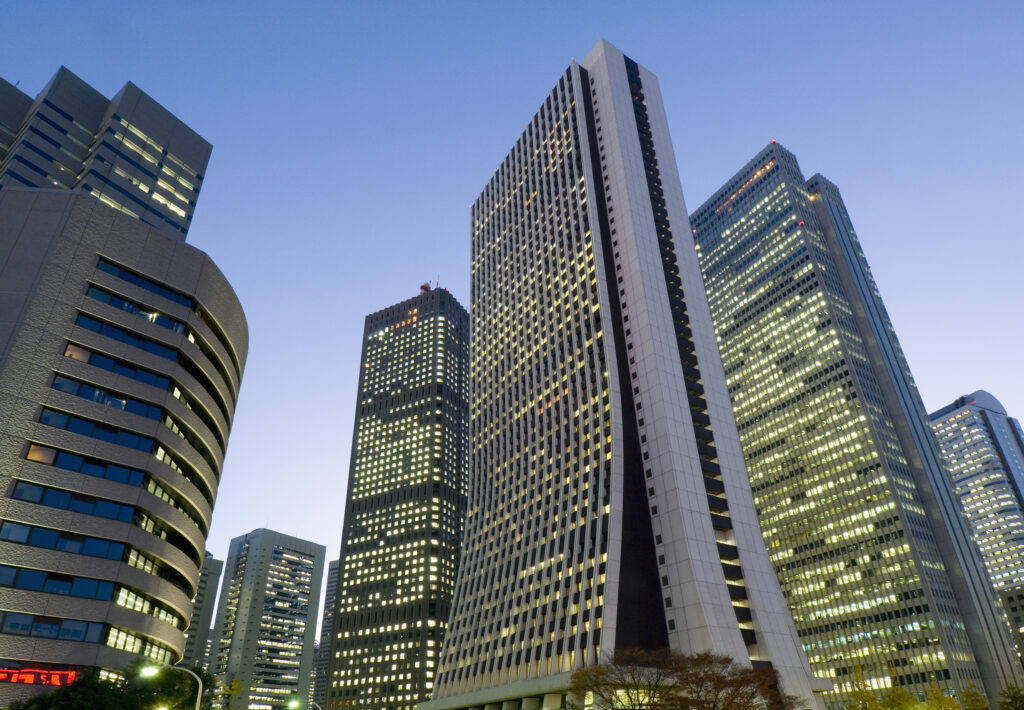
Bringing together the most advanced technology and structural design thinking of the era, the Shinjuku headquarters was built with a clear mission: to serve as a workplace that protects people from disaster.
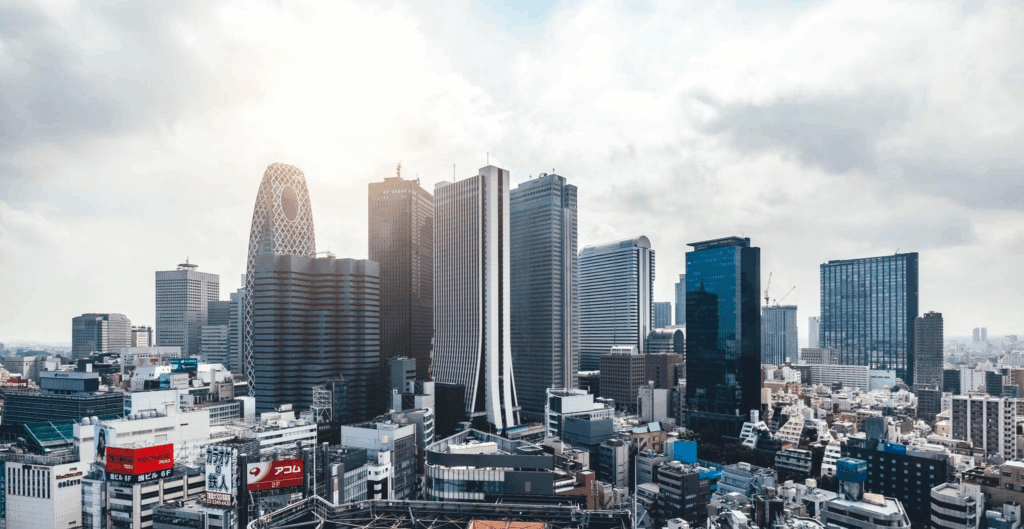
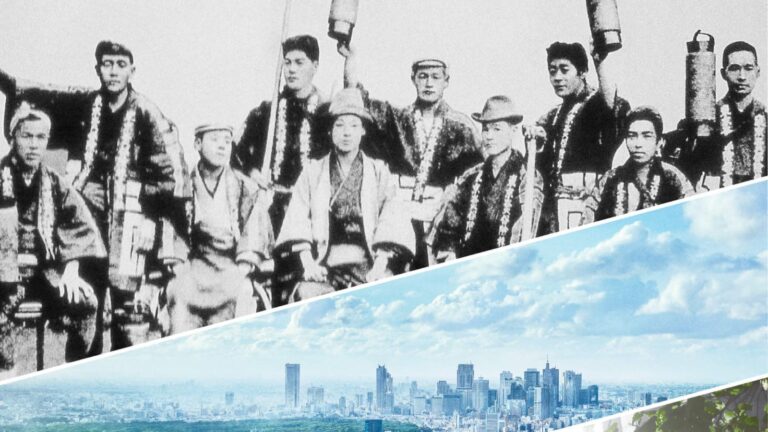
As the Shinjuku Subcenter Area developed around it, the building has quietly watched over the city’s transformation for half a century.
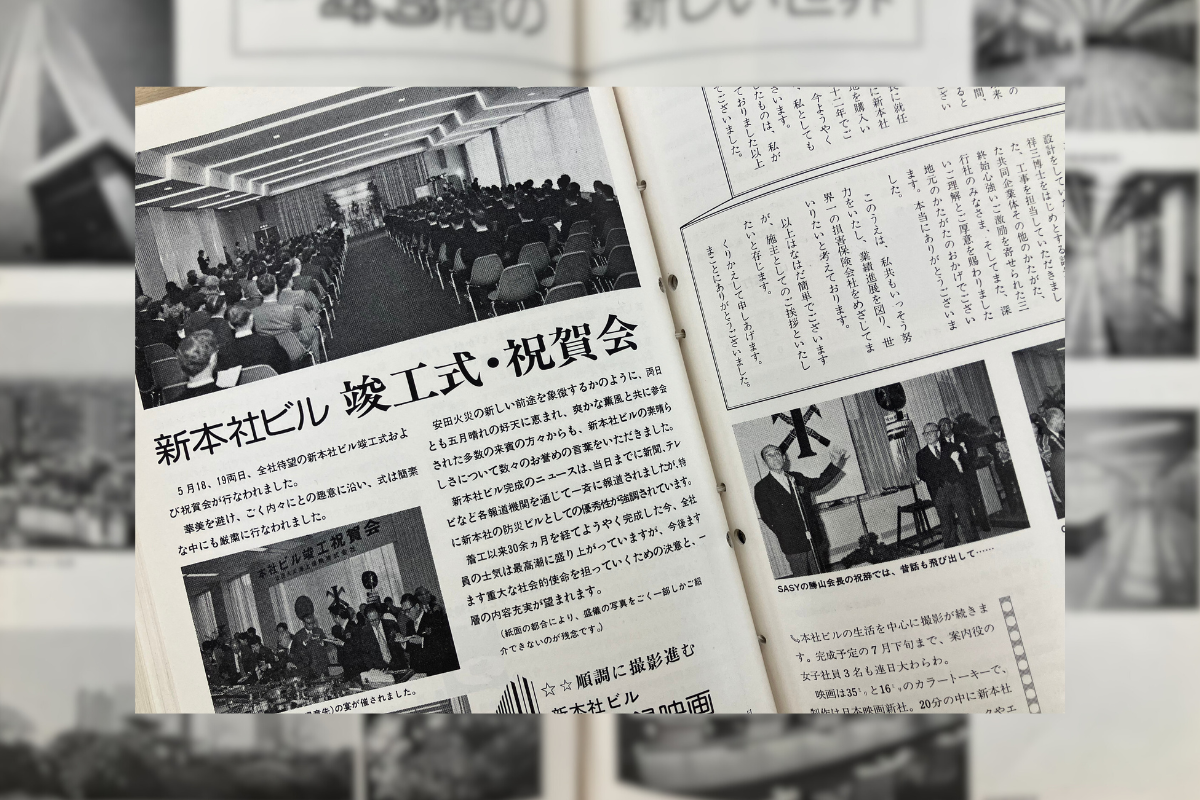
It would be unacceptable for an insurance company to cause a fire. We took every possible precaution when it came to disaster prevention.
President Takeo Miyoshi
President of Yasuda Fire & Marine (at the time)
Quote from the internal newsletter “Tobiguchi” (1976)
A building ahead of its time
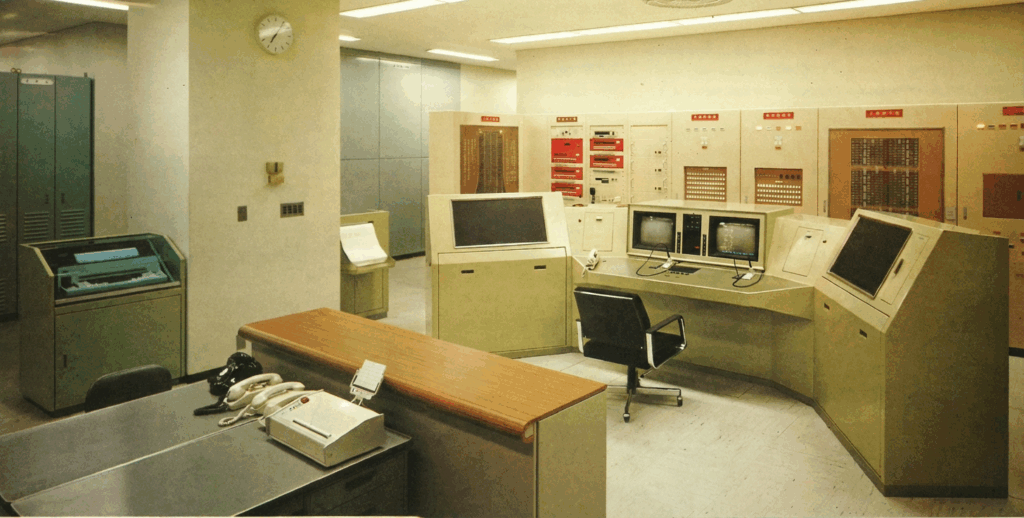
Even today, as the building marks its 50th anniversary, its design philosophy still feels remarkably forward-thinking. From the time of its completion, the building introduced a centralized computer system to manage building operations, an advanced approach that enabled efficient facility management and energy control. Also incorporated were systems designed to reduce environmental impact, including sealed waste disposal facilities.
The building also featured innovations that enhanced the safety and efficiency of the people working there. Automated window-cleaning systems are one well-known example. These technologies, designed with people at the center, anticipate ideas that today are discussed in terms of sustainability and smart buildings. In many ways, the Shinjuku headquarters building was well ahead of its time.
The ethos embodied by this building, its commitment to innovation and its deep consideration for people, lives on today in the corporate activities of the Sompo Group. Guided by SOMPO’s Purpose, “For a future of health, wellbeing and financial protection,” we continue to pursue new initiatives, including digital transformation and frontline business development.
A landmark where people and culture meet
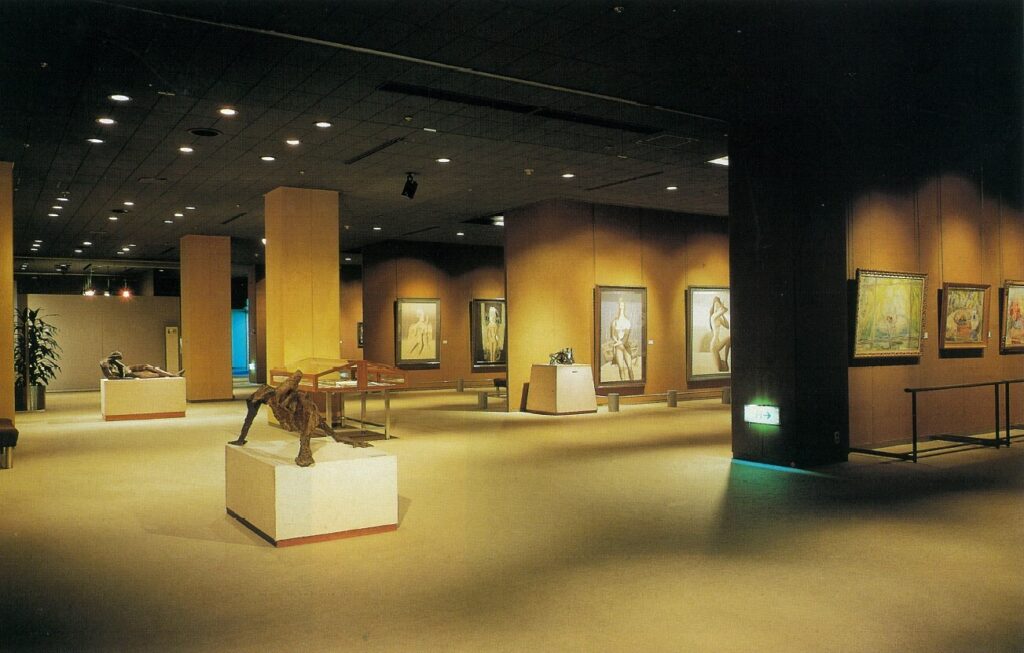
Over the years, the building has been more than simply a place to work. It has also been a place where people and culture intersect. The art museum located back then on the 42nd floor and the sculptures displayed throughout the building brought cultural richness to the surrounding office district, leaving lasting impressions for many who visited.
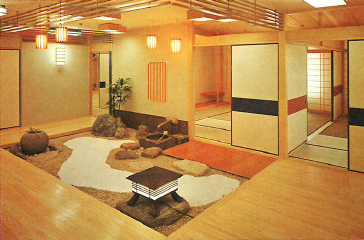
Employee facilities such as Japanese-style rooms and a medical clinic were also present, reflecting the company’s longstanding emphasis on employee wellbeing and human connection. Rather than focusing solely on efficiency and rationality, the building embodied a philosophy that respects the individual, nurturing a rich human spirit. This philosophy has been at the heart of the building since its construction half a century ago.
The Health Development Center occupies the entire 36th floor. I have always been very particular about employee health. I wanted anyone who became ill to recover completely.
Takeo Miyoshi
President of Yasuda Fire & Marine (at the time)
Quote from the internal newsletter “Tobiguchi” (1976)
Toward the next 50 years – expanding collaboration while maintaining a crucial role
By March 2027, part of the Sompo Group’s headquarters functions will relocate to Tokyo’s Toranomon district. At the same time, the Shinjuku headquarters building will evolve into a workplace that supports Sompo Japan’s new ways of working. Building on the philosophy established upon its completion 50 years ago, it will be reimagined as an office environment that realizes true wellbeing and comfort. Through this evolution, the building will continue to stand as a Shinjuku landmark, growing alongside the local community.
These strong foundations built in Shinjuku make it possible to take on new challenges from another base. As the two locations work in concert, each fulfilling its own important role, they will support value creation for the next era.